Your Ultimate Handbook for Choosing & Matching Drift-Spec Angle Modification Components alongside Optimized Suspension Components
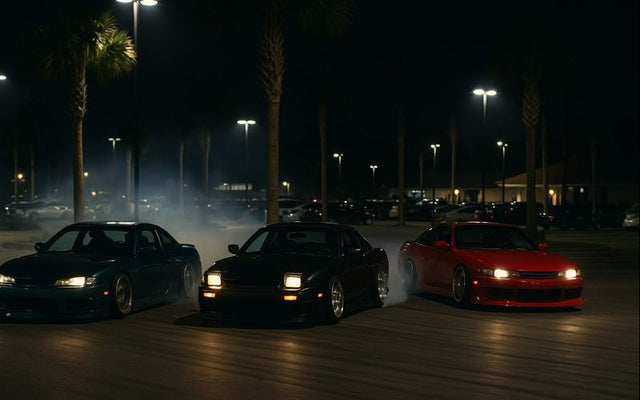
Within the intensely competitive arena of today's pro-level drifting, podium finishes is not merely solely a result of brute horsepower or behind-the-wheel courage. Instead, it has become a intricate discipline that demands a scrupulous fusion of choosing a inherently capable vehicle platform, equipping it with the highest-quality performance hardware, and, most critically, understanding its real-time performance on the course through cutting-edge vehicle dynamics analysis tools. This comprehensive handbook functions as your master plan starting from the initial concept of a competition vehicle through to the last engineering-refined tweaks that transform a powerful car into a predictable champion. We will thoroughly explore the methodical process of chassis dynamics adjustment, demonstrating how a advanced suspension tuning tool like precise measurement hardware eliminates approximation and provides unmatched clarity into your car's real-world performance.
The foundation of any successful drift car is, indisputably, the chassis itself. Certain cars have earned renowned reputation within the international oversteer community due to their natural handling characteristics, durable construction, and the vast ecosystem of performance parts available. Picking the right car is the initial and most important decision a builder will make. To illustrate, the BMW E36 is universally acknowledged as perhaps the the best all-around cars for drifting of the modern era. Its excellent 50/50 weight distribution, alongside a RWD setup and bulletproof inline-six powerplants, forms a platform that is at once easy to handle for newcomers and highly competitive in the possession of a professional driver. The successor of this philosophy, the BMW E46 platform, refines these strengths with a more refined chassis, wider stance for greater confidence, and still a greater degree of lock straight from the manufacturer. A distinct formidable option in the professional scene is the Corvette C6.
This muscle-derived sports car brings a distinctive combination of advantages to the drifting sport, featuring a light alloy frame, a backwards-positioned drivetrain component that contributes to an ideal front-to-rear mass ratio, and the tremendous thrust of a powerful LS V8 motor. This combination transforms it into an utter weapon on track, designed of starting and holding long angles with apparently effortless use of throttle. For those looking for exceptional bang-for-the-buck, the Nissan 350Z excels as a top-tier example. It arrives from the factory with a robust body structure, a competent OEM locking differential, and the free-revving V6 engine that delivers ample performance for learning and advancing in the discipline. Its newer version, the Nissan Z34, offers additional advancements in chassis stiffness, handling precision, and overall engine power, cementing its position as a popular pick among serious drivers. Further legendary platforms that merit mention encompass the agile rotary-powered FC generation RX-7, the ever-present Nissan S13, the American SN95 generation Mustang, the electronic-equipped E90 3 Series, and the compact yet incredibly engaging and instructive Mazda Miata. Each of these cars gives a distinct palette of traits, challenges, and capabilities, but they all have in common the basic components essential to be transformed into a competitive drift machine.
However, picking the correct platform is merely the starting point. To access the complete performance of every of these machines, significant upgrades to the steering and damping and springing systems are absolutely non-negotiable. This is where the domain of precision drift-spec hardware becomes sharp focus. The single most impactful modification for a serious drift machine is the installation of a maximum-angle drift angle kit. These advanced assemblies, like those developed by specialist companies like SLR, are designed to dramatically enhance the chassis's available steering angle. A factory street car is highly limited in how far its steering tires can rotate, a engineering limitation for daily operation. In sliding, but, extreme countersteering is constantly needed to manage and sustain a angle. An modification kit replaces the factory steering knuckles, linkages, and often suspension arms with components that permit the wheels to achieve steering lock beyond 70 or even 80 degs, versus a typical OEM limit of around 40 to 50 degrees.
This tremendously expanded steering angle offers the pilot with exponentially enhanced command during a angle, enabling it to be far more straightforward to start a oversteer moment, maintain it through a sweeping turn, and transition seamlessly from one direction to the other. The difference in handling is truly transformative. Combined with a correctly specified steering kit is the every bit as critical enhancement to the vehicle's spring and damper setup. Off-the-shelf or including expensive road dampers are simply not engineered for the unique and harsh needs of drifting. A drift-spec system of adjustable dampers is of utmost importance. These specialized dampers have custom damping rates and spring strength that are optimized for the rapid mass transition that is characteristic of sliding. When a operator initiates a slide, the chassis's inertia is thrown violently to the outside of the corner. Correct performance coilovers manage this movement in a controllable manner, enabling the vehicle to find its balance quickly and providing the operator accurate feedback through the wheel and cockpit. They furthermore allow for exact tuning of ride height, shock absorber rate, and corner weighting, which are all key elements of fine-tuning the vehicle's handling to a particular circuit or competition approach. As a system, a precision-engineered angle modification system and a expertly specified set of competition adjustable dampers constitute the core hardware cornerstone upon which all subsequent tuning is built.
Once the core parts is fitted, the following vital step in the development is the detailed adjustment of the vehicle's alignment. This is the realm of car suspension tuning, a process that can seem daunting to the uninitiated but is, in practice, the defining factor to turning a set of capable pieces into a harmonious and consistent vehicle. The most debated element of alignment for drifting is undoubtedly negative camber. Wheel camber is the tilt of the tire in relation to the vertical axis when looked at from the front-on of the vehicle. When the top of the tire is angled towards the chassis, this is known as negative camber. For oversteer driving, inward-leaning wheels on the front axle wheels is universally applied and is regarded as essential. The purpose is deeply tied to physics.
When a chassis is turning at high angles, the frame leans toward the external of the corner. This body roll forces the outer front tire to diminish its ideal contact patch with the asphalt. By adding negative camber, the wheel is pre-angled to account for this lean. As the vehicle rolls into the turn, the outside front tire gains a better contact patch on the road surface, optimizing its traction at the precise point when it is needed most for directional command. Usually, front angles for a dedicated sliding vehicle vary from approximately -3 degrees to as high as -5 degrees or even greater, depending on the details of the vehicle geometry, tire type, and pilot style. The back tires also use inward tilt, but the angles are usually more modest and subtler than the front axle. Excessive inward lean at the rear can result in the chassis overly tail-happy and difficult to manage on acceleration use, as it shrinks the effective tire footprint of the driven wheels during linear acceleration. Thus, rear angles are commonly in the range of -1 degree to -3 degrees, finding a precise balance between offering adequate side bite to aid in initiating and maintaining the angle while still maintaining usable hook-up for power-down the turn. alignment is just one element of the more complex alignment picture, which additionally involves toe setting, caster, and steer correction modification.
Toe setting refers to the angle of the wheels when looked at from a bird's-eye view. Toe-in means the front edges of the wheels are closer together than the rear edges, while negative toe means the converse. For oversteer, a small amount of front toe out is frequently run to improve the initial response steering response, making the car feel more nimble and willing to start a oversteer moment. Rear axle toe angle is typically set to zero or a very slight amount of toe-in to encourage predictability under power. caster angle is the frontwards or backwards angle of the kingpin axis when looked at from the side-on of the car. Increased positive caster improves feedback and high-velocity confidence, and it furthermore adds to inward lean gain during turning, which is extremely useful. Adjusting these settings is a intricate interaction where a adjustment to a single value can and often will influence the others. The old-school process for dialing in a vehicle's alignment for sliding has long been a tedious process of guesswork and adjustment. A tuner or engineering group would introduce a modification based on intuition, test the vehicle on track, use the pilot's personal sensation and comments, and then apply another change. This cycle would repeat over and over until the chassis felt "right" or the available testing time ran out. This approach is not just exceptionally slow in terms of hours and costs, but it is furthermore inherently inaccurate.
Pilot perception is a notoriously unreliable metric, colored by countless elements such as tiredness, changing track grip levels, weather, and merely the mindset of the pilot on that particular run. What feels "loose" on one pass might feel "pushing" on the following pass, resulting in conflicting feedback and frustrating tweaks. This long-standing challenge in chassis setup is exactly where modern technology has made its mark to completely change the landscape.
The rise and integration of advanced vehicle dynamics tools has introduced a completely new era for tuning and refining competitive drift cars. This new generation of tools, represented by innovative solutions like modern telemetry hardware, operate by physically recording the real-time mechanical performance of the vehicle as it is operated on the circuit. As opposed to depending on personal feedback, these systems gather quantifiable metrics on critical variables such as damper compression and extension, corner velocities, G-force loading, lock position, and driver input application. This collected telemetry is then processed by powerful algorithms that can graph and decode the metrics in a clear manner. For the very first time, tuners and teams can observe precisely what the chassis is doing at every moment of a lap. This ability revolutionizes the whole chassis setup procedure. Imagine the particular goal of dialing in the front negative camber for a particular chassis. As an alternative to making a adjustment from -3 degrees to -3.5 degrees and then running multiple laps to try and "feel" a difference, a vehicle dynamics tool can deliver instant and definitive information. The tool can indicate in a chart how the suspension's loading is acting during the key stages of a slide: turn-in, sustain, and switch. It can show if the current camber setting is allowing the outside front tire to achieve ideal grip or if the rubber is over-stressed on its outer edge.
The software can after analysis suggest empirical suggestions for change. Perhaps the data shows that the outside front tire is even stressing its edge at -3.5 degrees of camber, suggesting that a move towards angle, say -4 degrees, might be advantageous. On the other hand, the data might reveal that the tread is not achieving heat or that the inside shoulder is degrading unevenly, which could indicate that there is overly aggressive inward lean and a slight reduction back to -3.2 degrees would be more ideal. This degree of precision and practical intelligence was simply impossible in the days of pure seat-of-the-pants setup.
The impact of employing a advanced vehicle dynamics tool reaches well beyond merely setting camber angles. It becomes an priceless coilover drift suspension tuning guide setup tips that is specific to your specific car. When fine-tuning the damping values on your coilovers, rather than relying on general advice or replicating another driver's numbers, you can use the software to see how the car is behaving in response to your changes. The software can display the suspension travel path over a lap, showing if the coilovers are controlling the chassis motion effectively or if they are permitting the vehicle to oscillate uncontrollably after a transition. It can assist in diagnosing problems like excessive compression or topping out, allowing you to introduce informed choices to spring preload, damping settings, or stance. This methodology extends equally to the complex process of corner balancing. Beyond camber, the software can provide insight into how adjustments to toe settings and caster angle are affecting the car's handling during specific maneuvers of a slide. For example, it can help you to ascertain the best amount of front axle toe-out for your particular steering rack geometry and competition style by measuring the quickness of turn-in reaction and the stability of the car at maximum countersteer. This transforms the system an incredibly powerful vehicle dynamics manual that is constantly calibrated by the live performance of your own car on the track. It shifts the whole process from a mysterious craft into a scientific development procedure.
Additionally, the application of a tool like data acquisition is in no way confined to professional engineers with extensive funding. For the club-level competitor, it functions as an incredible equalizer. It practically gives the tuner with the analysis of a expert suspension specialist without requiring the typical overhead. It drastically shortens the tuning process by delivering definitive directions to questions that would otherwise take seasons of trial and error to answer. A driver can learn how their specific chassis responds to different inputs, gaining a more intuitive knowledge of car control in the endeavor. It also democratizes high-level performance tuning techniques, enabling every enthusiast with the drive to refine their car to accomplish it in a systematic and productive way. This is particularly important in a activity like oversteer competition, where tuning knowledge has in the past been a highly secretive asset among top crews. In the modern era, that capability can be in the hands of every serious enthusiast.
In conclusion, the process to constructing and dialing in the perfect competitive sliding vehicle is a multi-faceted endeavor that perfectly blends classic engineering wisdom with cutting-edge telemetry tools. It commences with the wise selection of a legendary platform, car alignment tuning followed by the installation of non-negotiable drift suspension tuning guide drift-spec components like drift-spec steering angle kits and properly selected drift-spec suspension units. The journey then advances into the precision realm of chassis dynamics adjustment, where settings like camber, toe, and caster angle are carefully adjusted to suit the vehicle's modified capabilities and the pilot's specific needs. Finally, and what really separates the today's approach from the old ways, is the integration of a advanced suspension tuning application. This tool removes the guesswork and waste of only feel-based adjustment by providing quantifiable, actual data on how the car is really behaving. It serves as an indispensable suspension tuning tool, a definitive alignment optimization handbook, and a master performance analyzer. Together, this holistic approach guarantees that all component of the drift car—from the selection of the chassis to the last adjustment on the suspension—is perfected for maximum competitiveness on the competition venue. It represents the full maturation of the discipline of oversteer driving, bridging raw car control with surgical vehicle setup to forge the most competitive cars attainable.