Transforming Your Drift Machine using Actionable Analysis provided by a Advanced Suspension Tuning Software
In the high-stakes world of contemporary professional drifting, success is no longer purely a result of brute engine power or pilot aggression. Conversely, it is now a intricate discipline that demands a painstaking blend of selecting a inherently capable car, equipping it with the most precise competition hardware, and, most importantly, comprehending its live behavior on the track through cutting-edge vehicle dynamics analysis tools. This comprehensive guide acts as your roadmap from the initial idea of a competition vehicle through to the final data-informed tweaks that elevate a capable vehicle into a repeatable winner. We will delve deep into the precise engineering of vehicle alignment optimization, showing how a advanced drift tuning app like GripDial eliminates guesswork and provides unparalleled insight into your vehicle's actual behavior.
The cornerstone of any exceptional drift machine is, undoubtedly, the platform itself. A select group of cars have earned legendary status within the global drifting culture due to their built-in handling characteristics, durable build quality, and the immense range of aftermarket support available. Selecting the optimal starting point is the primary and most significant selection a enthusiast will make. As an example, the BMW's E36 3 Series is widely regarded as one of the greatest balanced drift platforms of history. Its near-perfect 50/50 weight distribution, alongside a RWD configuration and bulletproof six-cylinder powerplants, establishes a chassis that is at once accessible for beginners and highly effective in the control of a professional competitor. The successor of this concept, the BMW E46, refines these attributes with a more developed structure, wider stance for improved stability, and yet a greater degree of lock straight from the OEM. Another dominant platform in the professional circuit is the Chevrolet Corvette C6.
This muscle-derived performance car offers a distinctive set of benefits to the drifting discipline, such as a low-mass aluminium structure, a transaxle-style transaxle that aids in an excellent balance, and the immense low-end power of a powerful LS V8 motor. This fusion makes it an complete weapon on track, able of entering and holding continuous drifts with apparently minimal use of acceleration. For those looking for remarkable value, the 350Z model Nissan rises above as a excellent example. It comes from the manufacturer with a robust chassis, a effective original LSD, and the free-revving V6 engine that offers plenty of power and torque for learning and advancing in the discipline. Its successor, the Nissan 370Z, presents more refinements in chassis stiffness, suspension design, and peak powerplant output, solidifying its status as a common selection among serious pilots. Additional historic platforms that deserve consideration include the lightweight Wankel-engined FC generation RX-7, the ever-present Nissan S13, the American Ford Mustang SN95, the modern E90 3 Series, and the tiny yet surprisingly playful and forgiving Mazda MX-5. Each of these platforms offers a distinct palette of characteristics, challenges, and potentials, but they all share the fundamental ingredients required to serve as a competitive drift car.
However, selecting the right chassis is merely the beginning. To unlock the true performance of every of these machines, major changes to the steering system and damping and springing systems are completely mandatory. This is where the realm of precision aftermarket components becomes sharp importance. The most most game-changing modification for a serious drift machine is the installation of a high-performance angle modification kit. These engineered systems, like those developed by industry leaders like specialist manufacturers, are created to dramatically increase the vehicle's possible turning lock. A factory street car is highly restricted in how far its front wheels can turn, a safety trade-off for on-road operation. In oversteer driving, but, extreme countersteering is frequently necessary to manage and hold a slide. An modification kit substitutes the factory hubs, rod ends, and sometimes A-arms with parts that allow the front tires to achieve steering lock beyond 70 or even 80 degrees, as opposed to a typical OEM limit of around 40 to 50 °.
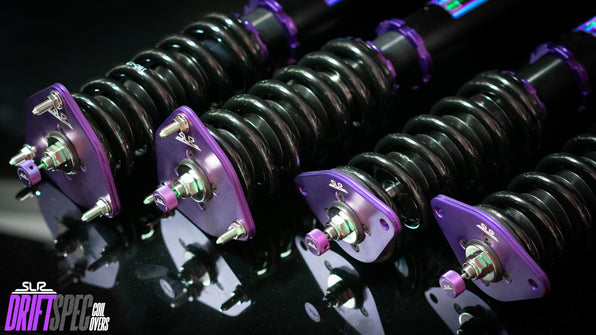
This immensely increased capability provides the operator with dramatically more authority during a drift, enabling it to be far more straightforward to initiate a oversteer moment, sustain it through a sweeping corner, and change smoothly from one angle to another. The contrast in drivability is absolutely revolutionary. Coupled with a appropriately chosen modification is the equally essential enhancement to the car's spring and damper setup. Off-the-shelf or including expensive road coilovers are just not intended for the unique and harsh needs of drifting. A purpose-built system of coilovers is crucial. These engineered coilovers incorporate unique valving and spring stiffness that are tuned for the extreme weight transfer that is inherent of aggressive driving. When a operator initiates a slide, the car's inertia is thrown forcefully to the outer of the bend. Optimal drift-spec coilovers handle this shift in a predictable manner, enabling the car to find its balance promptly and giving the driver precise feel through the controls and cockpit. They also allow for precise tuning of ground clearance, shock absorber rate, and weight balance, which are all fundamental parts of fine-tuning the vehicle's handling to a specific track or piloting technique. In combination, a precision-engineered steering angle kit and a properly selected system of competition coilovers are the undeniable physical foundation upon which all future optimization is built.
Once the core parts is in place, the next vital stage in the build is the detailed tuning of the vehicle's wheel angles. This is the world of vehicle alignment optimization, a process that can feel intimidating to the uninitiated but is, in practice, the secret to turning a assembly of fast pieces into a harmonious and predictable machine. The most debated aspect of tuning for drifting is definitely camber angle. Camber is the tilt of the wheel in relation to the vertical line when viewed from the forward of the vehicle. If the top of the tire is tilted towards the chassis, this is called inward tilt. For oversteer driving, negative camber on the steering wheels is generally employed and is regarded as critical. The logic is deeply related to physics.
When a vehicle is going around a bend at limit slip angles, the body rolls toward the outside of the turn. This body roll causes the outer front wheel to reduce its ideal footprint with the track surface. By applying inward lean, the wheel is pre-leaned to compensate for this roll. As the chassis leans into the bend, the outside front tire gains a better contact patch car suspension tuning against the road surface, increasing its traction at the critical time when it is absolutely essential for steering authority. Usually, front axle adjustments for a dedicated drift machine fall between approximately -3 degrees to as much as -5 degrees or even more, based on the parameters of the vehicle setup, rubber selection, and operator feel. The rear wheels also use inward tilt, but the values are usually less and subtler than the front axle. Excessive negative camber at the rear can cause the vehicle to excessively tail-happy and hard to predict on acceleration application, as it reduces the effective tire footprint of the powered tires during forward throttle application. Hence, rear axle adjustments are commonly in the range of -1 degree to -3 degrees, striking a delicate balance between providing enough cornering grip to help in initiating and holding the drift while still preserving effective grip for exiting the bend. Camber is only one part of the broader suspension geometry equation, which also includes toe, caster, and bump steer correction.
Toe setting is the orientation of the tires as seen from above. Toe-in means the front edges of the tires are nearer together than the rear edges, while toe-out means the opposite. For oversteer, a modest amount of front axle toe out is often used to improve the turn-in handling response, making the vehicle feel more responsive and ready to start a slide. Rear toe angle is usually set to zero or a very minute amount of inward toe to promote stability under throttle. caster angle is the forward or rearward inclination of the kingpin axis when viewed from the lateral of the car. Positive caster angle improves steering feel and high-speed solidity, and it also adds to inward lean gain during steering, which is very beneficial. Setting these settings is a complex interaction where a adjustment to one value can and will influence the other settings. The traditional approach for dialing in a chassis's alignment for competition has for a long time been a tedious affair of trial and error. A tuner or team would introduce a change based on a hunch, drive the chassis on track, rely on the operator's subjective perception and feedback, and then introduce another tweak. This cycle would continue over and over until the vehicle felt "acceptable" or the allotted practice time ended. This methodology is not only incredibly slow in terms of time and tires, fuel, and parts, but it is furthermore fundamentally inaccurate.
Pilot perception is a famously unreliable metric, affected by countless variables such as exhaustion, changing track surfaces, weather, and simply the mindset of the operator on that particular session. What feels "tail-happy" on one pass might feel "tight" on the following pass, leading to conflicting information and counterproductive adjustments. This long-standing limitation in car suspension tuning is exactly where contemporary telemetry systems has stepped in to completely change the landscape.
The advent and integration of advanced suspension tuning applications has ushered in a completely new era for tuning and refining competitive sliding vehicles. This new generation of tools, exemplified by cutting-edge products like modern telemetry hardware, work by directly measuring the live mechanical performance of the vehicle as it is operated on the course. Unlike relying on personal feedback, these devices gather quantifiable metrics on essential parameters such as shock absorber movement, corner velocities, lateral and longitudinal g-forces, wheel angle, and accelerator and brake pedal input. This raw data stream is then analyzed by advanced applications that can plot and decode the information in a clear manner. For the very first time, engineers and crews can visualize specifically what the chassis is doing at each point of a lap. This capability transforms the entire alignment optimization procedure. Think about the aforementioned task of optimizing the front camber for a specific chassis. Rather than applying a adjustment from -3 degrees to -3.5 degrees and then running many passes to try and "perceive" a difference, a suspension tuning tool can provide instant and clear information. The software can display graphically how the wheel's grip is acting during the critical stages of a angle: turn-in, mid-corner, and changing direction. It can show if the current camber setting is allowing the outside front tire to maintain optimal contact or if the compound is working inefficiently on its external shoulder.
The system can then make fact-based advice for change. Perhaps the data shows that the outside front tire is still overloading its outer shoulder at -3.5 degrees of negative camber, indicating that an increase to negative camber, say -4 degrees, might be warranted. Alternatively, the data might reveal that the tread is failing to achieving temperature or that the inner shoulder is wearing excessively, which could point to that there is excessive inward lean and a slight lessening back to -3.2 degrees would be better drift tuning app optimal. This standard of accuracy and actionable analysis was literally unattainable in the days of exclusively mechanical setup.
The effect of using a comprehensive vehicle dynamics tool reaches far beyond only setting camber angles. It serves as an priceless damper adjustment manual that is tailored to your specific chassis. When adjusting the rebound and compression clickers on your suspension, instead of depending on vague tips or copying another team's numbers, you can utilize the software to see how the vehicle is behaving in relation to your adjustments. The tool can graph the damper movement data over a lap, showing if the coilovers are managing the chassis motion effectively or if they are permitting the vehicle to bounce uncontrollably after a transition. It can assist in pinpointing issues like hitting the bump stops or excessive extension, enabling you to apply data-backed decisions to preload settings, rebound/compression rates, or ride height. This methodology extends equally to the intricate process of corner balancing. Beyond camber, the tool can offer insight into how adjustments to toe settings and caster angle are affecting the vehicle's balance during various parts of a lap. For example, it can help you to ascertain the ideal amount of front axle negative toe for your specific steering configuration and piloting technique by showing the response time of initial response and the stability of the chassis at maximum lock. This turns the software an exceptionally useful drift suspension drift angle kits tuning guide that is dynamically updated by the real-world behavior of your personal vehicle on the circuit. It shifts the whole process from a mysterious craft into a methodical optimization process.
Additionally, the application of a tool like GripDial is in no way confined to professional engineers with extensive funding. For the club-level competitor, it serves as an amazing equalizer. It practically provides the builder with the insight of a professional race engineer without requiring the typical overhead. It speeds up the development time by giving clear answers to challenges that would normally take years of trial and error to understand. A driver can see how their particular car responds to different settings, developing a more profound understanding of suspension theory in the journey. It additionally democratizes professional performance tuning principles, allowing all drivers with the desire to optimize their car to do so in a efficient and productive manner. This is notably valuable in a sport like oversteer competition, where tuning knowledge has in the past been a tightly held commodity among professional drivers. Now, that capability can be in the hands of every serious builder.
In summary, the journey to constructing and tuning the ideal championship-contending drift car is a multi-faceted endeavor that smoothly integrates proven mechanical knowledge with cutting-edge telemetry technology. It commences with the strategic pick of a proven car, followed by the application of critical drift-spec components like high-performance drift angle kits and correctly selected competition suspension units. The process then progresses into the detailed stage of car suspension tuning, where settings like negative camber, toe, and caster angle are meticulously set to complement the vehicle's modified hardware and the driver's individual needs. Finally, and what genuinely differentiates the modern methodology from the traditional methods, is the integration of a sophisticated suspension tuning application. This platform eliminates the uncertainty and trial and error of purely subjective setup by giving empirical, real-time telemetry on how the car is really functioning. It acts as an incredible suspension tuning tool, a definitive alignment optimization handbook, and a master vehicle dynamics tool. In unison, this integrated philosophy leads to that every aspect of the drift machine—from the choice of the platform to the most minute tweak on the suspension—is perfected for ultimate success on the competition venue. It embodies the total progression of the art of drifting, bridging raw driving skill with precise chassis dynamics to build the most competitive machines possible.